
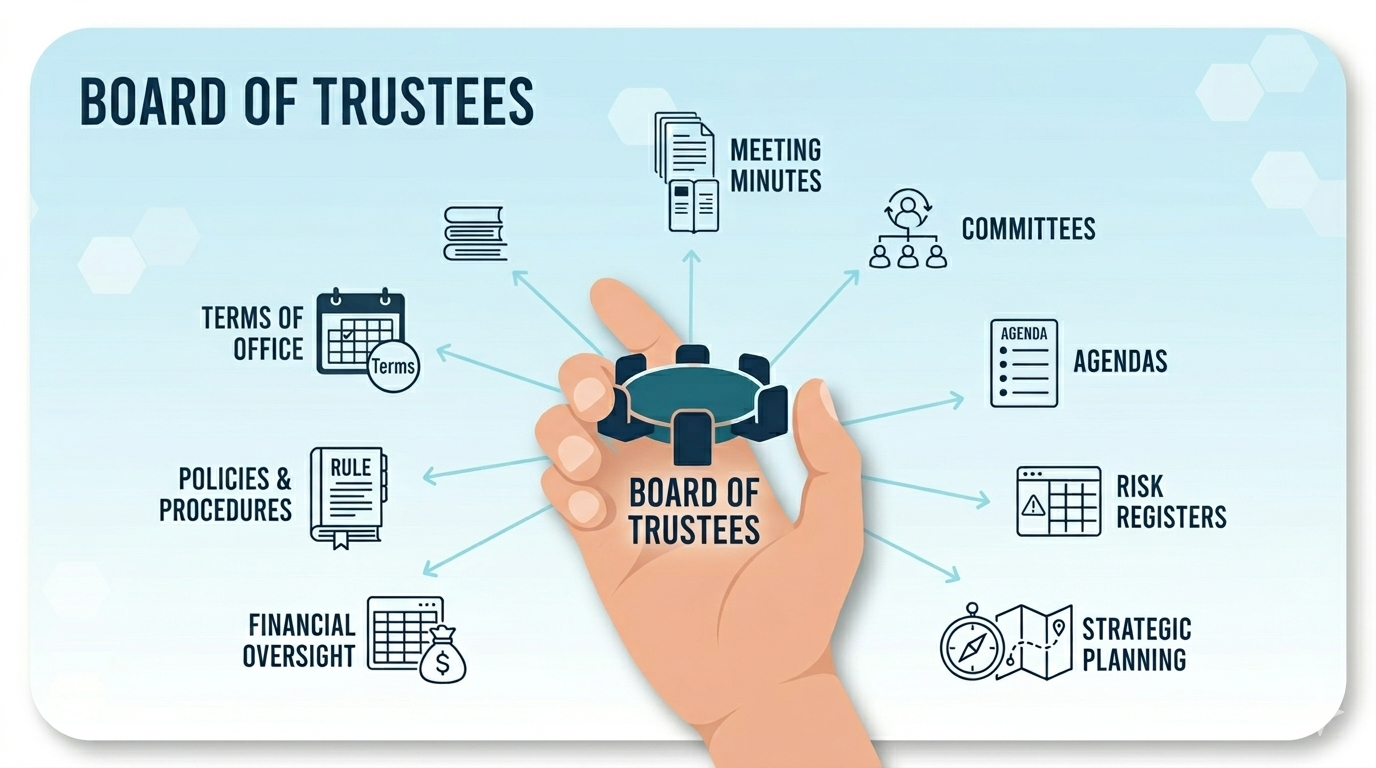
Quick answer: A board of trustees is the governing body of a UK charity, made up of volunteers who are legally responsible for the organisation’s direction, finances, and compliance. Trustees set strategy, safeguard assets, and ensure the charity acts in line with its purpose, i.e. tend to focus on strategy and forward-looking direction, not day to day (executive) matters.
If you’ve ever been asked to become a trustee — or wondered who actually runs a charity — this post is for you.
Most people have a vague sense that charities are run by volunteers. But the role of trustee is more specific, and more important, than that. Understanding what a board of trustees does is essential whether you’re thinking of joining one, already sitting on one, or leading a charity that relies on its board to function well.
And if the idea of becoming a trustee feels a little daunting, you’re far from alone. According to the Charity Commission, there are around 900,000 charity trustees in England and Wales, with research suggesting roughly 150,000 new trustees joining boards every year. The role is well-trodden ground – although most volunteer for the Charity’s purpose and values, rather than to be ‘governance experts’. Which can make things more daunting. And perhaps brings into perspective why tools like Governance360 are increasingly being used to reduce this pain.
This blog by the way isn’t focused on pension trustees or other similar trustee roles held within certain regulated financial services. This post focuses on charity trustees in England and Wales — the people responsible for governing charitable organisations under the Charities Act.
What is a charity trustee?
A charity trustee is someone who shares ultimate responsibility for governing a charity. The Charity Commission describes trustees as those who have “general control and management of the administration of a charity” — and that definition carries real weight.
Trustees are not employees. They’re volunteers who give their time to ensure the charity is well-run, financially sound, and true to its charitable purpose. Depending on the charity’s structure, they might be called trustees, directors, board members, or governors — but the legal responsibilities are broadly the same.
Key responsibilities include:
- Setting the charity’s strategy and long-term direction
- Overseeing finances and protecting assets
- Ensuring legal and regulatory compliance
- Appointing and supporting senior staff (where relevant)
- Managing risk
For a deeper look at what good governance involves, our Board Governance 101 guide covers the essentials in full.
The three commitments every trustee must understand
Before joining a board of trustees, it’s worth being honest about what the role involves. There are three areas where people are sometimes caught off guard.
1. Financial commitment
Most trustee roles are unpaid. You give your time freely. In most cases, expenses can be reimbursed, but the role itself carries no salary. It’s also worth knowing that trustees can, in limited circumstances, be held personally liable if serious mismanagement occurs — which is why understanding your duties matters from day one.
2. Time commitment
The time required varies enormously. A small local charity might ask for four board meetings a year plus occasional email correspondence. A larger organisation might expect sub-committee involvement, strategy days, and regular contact with the executive team. Be clear on the expectation before you accept.
3. Skill commitment
Good boards of trustees are built on a mix of skills — finance, legal, fundraising, communications, sector knowledge. You don’t need to be an expert in everything, but you do need to engage meaningfully and ask good questions. The best trustees are curious, diligent, and willing to learn.
What is a board of trustees and how does it work?
The board of trustees is the collective governing body. It doesn’t run the charity day to day — that’s the job of staff or volunteers working operationally. The board’s role is oversight, strategy, and accountability.
A typical charity board of trustees will have between five and twelve members. Most have a Chair, a Treasurer, and a Secretary as named officers, with other trustees contributing as generalist members or through sub-committees focused on areas like finance or safeguarding.
The board meets regularly — usually four to six times a year — to review reports, make decisions, and hold the executive to account. Between meetings, trustees may be consulted by email or involved in specific projects.
What makes a board work well isn’t just having the right people — it’s having the right processes. Clear board papers, well-run meetings, and proper record-keeping all make a difference. When those foundations are in place, trustees can focus on what matters: making good decisions for the charity.
Why Governance360 works for trustee boards
Running a board of trustees well takes organisation. That’s where Governance360 comes in — a board portal built specifically for smaller charities, community groups, and volunteer-led organisations.
Here are three reasons trustee boards find it useful:
1. Everything in one place
Board papers, minutes, policies, and actions all sit in a secure, shared space. Trustees get what they need before meetings — and nothing gets lost in email threads. It saves the Chair and Secretary real time, and it means trustees arrive prepared.
2. Built for how charity boards actually work
Governance360 was founded by charity trustees, not software developers chasing enterprise clients. It’s designed around the realities of a volunteer board — straightforward to use, genuinely affordable, and focused on what smaller organisations actually need rather than features they’ll never use.
3. You can try it for free — no commitment needed
If you’re setting up a board of trustees for the first time, or looking to improve how your existing board operates, Governance360 offers a free trial so you can see whether it works for you before making any decisions. No sales call required.
Find out more here